Sons of David Foundation on Paulownia: empress tree
Showing posts with label empress tree. Show all posts

Wednesday, October 8, 2008

Enter the PanAmerican Properties Essay Contest.


Tags: , , , , , , , , , ,

Enter the PanAmerican Properties Essay Contest.


Reduce your carbon footprint with every tree you plant...

WORLDS FASTEST GROWING HARDWOOD SHADE TREE!

THE ROYAL EMPRESS TREE

Also known as Sapphire Dragon Tree, Paulownia, Kiri Tree, Foxglove Tree & Princess Tree

Paulownia trees are your best choice for a fast growing, beautiful tree that is unsurpassed in its ability to help our environment simply by growing.

Save the Earth

Essay Contest

Trees on Steroids!! How planting paulownia trees, one of the fastest growing trees in the world, can help reduce your impact on the environment.

1. Entries received from 1 October 2008 to 30 November 2008 will be eligible to participate. All entries will become the property of the Sons of David Foundation, to be published at their discretion.

2. All entries should be from 750- 1500 words and may be submitted in English, Spanish, French and German. Send entries to essay@paulownianow.org


3. One winner will be selected within 60 days of the close of the contest.

4. The winning essay will be published by the Foundation on the Paulownia web site www.paulownianow.org and blog http://www.paulownianow.blogspot.com


5. The prize!! 100 paulownia seeds plus planting instructions, valued at more than $100 USD, will be sent to the winning contestant.

6. For any question please write to info@paulownianow.org. Your participation in this contest can make a difference in the lives of many living in extreme poverty.

Lumber from Paulownia trees has been greatly revered in Japan and China for centuries. With the decline of our native forests to the lumber industry, Paulownia trees have come into the spotlight worldwide for their ability to produce high quality timber at a much faster rate than any other hardwood tree.

With an extraordinary growth rate and huge air filtering leaves that convert carbon into oxygen at a higher rate than almost any other tree, Royal Empress Trees are rapidly becoming an important part of the solution to reducing our impact on the Earth.

PanAmerican Properties is developing a reforestation initiative designed to create a neutral zone between the indigenous reservations, legitimately established by both international and national law and the non indigenous communities that are invading these reservations and are cutting down the forests to grow grass for grazing cattle.

This newly titled property separates both populations and not only reduces racial tension but also permits the indigenous communities restore their ecology and the environment.

The project offers the nation a politically correct solution to a longstanding serious issue. Strategic reforestation, whereby the Latino and the indigenous populations will be responsible for the growth and maintenance of the trees and be the beneficiaries of the income derived from the selective cutting of the forest.

This sustainable development offers an environmentally friendly solution to generate income for both groups in areas of extreme poverty. This project creates new jobs and sources of income for students graduating from the PanAm Pro training programs for small business, agriculture, agro forestry, and forest ranger.

PanAm Pro pursues non-confrontational, pragmatic, market-based solutions to conservation challenges. This makes it essential for us to work collaboratively with partners—communities, businesses, government agencies, multilateral institutions, individuals and other non-profit organizations.

Most of the world’s biodiversity exists in areas inhabited by people. Effective conservation cannot be achieved unless the people who live and rely on those lands are an integral part of the conservation process. The Foundation depends upon partnerships with indigenous people and local communities to conserve some of the most biologically critical and threatened ecosystems on Earth.

PanAm Pro works with local communities to improve their quality of life from better management of the resource base, including water use, tourism and forest management. This will help maintain and improve local livelihoods, strengthen local economies and improve their capacity for conserving the remaining biodiversity.


Powered by Qumana

Saturday, June 7, 2008

About Paulownia From Wikipedia Encyclopedia


Paulownia: From Wikipedia, the free encyclopedia

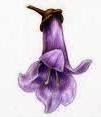
Paulownia is a genus of between 6–17 species (depending on taxonomic authority) of plants in the monogeneric family Paulowniaceae, related to and sometimes included in the Scrophulariaceae. They are native to much of China (its name in Chinese is pinyin: pàotóng), south to northern Laos and Vietnam, and long cultivated elsewhere in eastern Asia, notably in Japan and Korea. They are deciduous tree 10–25 m tall, with large leaves 15–40 cm across, arranged in opposite pairs on the stem. The flowers are produced in early spring on panicles 10–30 cm long, with a tubular purple corolla resembling a foxglove flower. The fruit is a dry capsule, containing thousands of minute seeds.

The genus was named in honour of Queen Anna Pavlovna of the Netherlands (1795–1865), daughter of Tsar Paul I of Russia.

Paulownia fortunei is a fast-growing tree that is grown commercially for the production of hardwood timber.

Paulownia tomentosa is listed as an invasive species in the southeastern United States, having been introduced there as an ornamental tree for its decorative flowers.

Uses

It is popular in its native China for reforestation, roadside planting and as an ornamental tree. It grows well in a wide variety of soil types, notably poor ones, but needs a lot of light and does not like a high water table. Paulownia timber is a pale whitish coloured wood with a straight grain. Its characteristics of rot resistance and a very high ignition point ensure the timber's popularity in the world market. Paulownia grown on plantations generally has widely spaced growth rings and is therefore much less valuable. The wood is also important in China, Korea, and Japan for making the soundboards of stringed musical instruments such as the guqin, pipa, koto, and kayagum.

Testing by CSIRO in Australia has shown that Paulownia wood is very attractive for wood-boring insects. Paulownia species are also used as food plants by the larvae of some Lepidoptera species including Endoclita excrescens.


Paulownia is known in Japanese as kiri, specifically referring to P. tomentosa; it is also known as the "princess tree". It was once customary to plant a Paulownia tree when a baby girl was born, and then to make it into a dresser as a wedding present when she gets married. Paulownia is the mon of the office of prime minister and also serves as the emblem of the cabinet and the government (vis-à-vis the chrysanthemum being the Imperial Seal of Japan). It is one of the suits in hanafuda, associated with the month of December. Japan: An Illustrated Encyclopedia (page 1189; Tokyo: Kodansha, 1993. ISBN 4-06-931098-3) states:

Paulownia wood is very light, fine-grained, soft, and warp-resistant and is used for chests, boxes, and clogs (geta). The wood is burned to make charcoal for sketching and powder for fireworks, the bark is made into a dye, and the leaves are used in vermicide preparations.

The fine grained soft and warp resistant properties also make Paulownia wood exceptionally suited for making wooden surfboards. Tom Wegener, Roy Stewart and more recently "Empress Surfboards" are amongst the shapers who pioneered its use. The resulting surfboards do not need to be glassed unlike Balsa wood.

More recently, it is used as body material for low-cost electric guitars and as the core for lightweight touring skis. It is often used in guitars as the core body, then finished with another kind of wood, such as the Dean ML XM that is made of paulownia as the body but is finished with mahogany.

Paulownia is extremely fast growing; some species of plantation Paulownia can be harvested for saw timber in as little as five years. Once the trees are harvested, they regenerate from their existing root systems, earning them the name of the “Phoenix tree." Paulownia has the ability to reclaim ecologically stressed and degenerate patches of land relatively quickly. Its root systems run deep and penetrate compacted and contaminated soils which have resulted from industrialized development. Paulownia is a phyto-remediator, increasing the organic content of degraded soils, processing and filtering contaminants through the uptake of its vascular system, and emitting oxygen into the atmosphere.

Paulownia Elongata


Paulownia elongata is a species of plant in the Paulowniaceae family. It is used as a forestry tree in North America and China. It is reportedly the fastest growing hardwood trees, which are known to grow up to 15 or more feet in the first year. Commercial plantations are normally established from selected clones resulting from micropropagation. Some proponents claim that P. elongata plantations can reach a harvestable size in five to seven years. Leaves are very large and pubescent. This species can withstand a very wide range of environmental conditions; however, it will not grow at altitude.

P. elongata has a number of uses:

  • An ornamental tree of parks and gardens; grown for its purple flowers and shade tolerance.
  • It is a forestry tree producing strong, yet light wood.
  • Owing to the large quantity of biomass produced annually, it is suited for use as a feedstock for biofuel production.
  • For more information on paulownia you may visit our website at www.paulownianow.org

Sunday, June 1, 2008

Paulownia: The World’s Most Versatile Wood!


Most people know the Royal Empress Tree as the world’s fastest growing shade tree. Its extraordinarily fast growth (as much as ten feet per year) and beautiful springtime blooms have endeared this tree to many homeowners. However, this tree is also being grown commercially and people are starting to notice the incredible versatility of this wood.

Empress Tree wood is almost one third the weight of Oak and half the weight of Pine. Nevertheless, it has one of the highest strength to weight ratios of any wood. This makes it perfect for the manufacture of plywood, moldings, window frames and other building materials. Additionally, it’s ideal for industries that require high strength to weight ratios in products such as boats, surfboards, and RV’s.

Also, the tree’s high temperature resistance makes the wood extremely fire resistant. Consequently, it’s very desirable in your home. Ignition temperature is about 400 degrees Celsius, twice that of conventional woods.

Royal Empress (Paulownia) wood is also extremely stable. It is rot-resistant and won’t warp or crack. This makes it outstanding in the manufacture of furniture and handicrafts of all kinds.

The high consistency of sound radiation quality of Empress Tree wood also makes it highly prized in the production of musical instruments. Empress Trees are even used as animal feeds and for medicinal purposes!

There is seemingly no end to the high quality uses for the Royal Empress Tree, the world’s most versatile wood.